1. Tempeh slices
2. Marinate with coriander powder, sambar powder, chilli powder , salt, soy sauce, apple cider vinegar and water. Mix all in bowl and then pour over tempeh slices
3. onion , salt and sugar pan fry till golden
4.tomato, avocado(optional), lettuce slices, cheese slices
5. After marination pan fry with oil the tempeh till brown on both sides. add some pepper powder on top.
6. Toast bread. spread mustard sauce on one side. Place tempeh, top over with sauteed onions, tomato, cheese and then lettuce
Saturday, June 9, 2018

Saturday, September 17, 2016
Beetroot Burger
1. Grate 2 beet roots (remove water) and roast or pan fry for 5-6 minutes and keep it aside
2.Add olive oil 2 spoons to pan and add 2 minced onions. Add salt, pepper, chilli powder, garam masala. Add minced 2-3 garlic cloves. Fry till onions are golden and sticky. Add 2 spoons apple vinegar and clean the stick thing.
3. Add beets to pan and add raw oats powdered (in mixer) and microwaved pumpkin and sunflower seeds.
4. Add salt and pepper after tasting. Also add 1 egg and mix everything well and keep in fridge for 3-4 hours.
Use cream cheese while grilling either the patty or buns.
Make balls and grill the patties. Grill burger buns. Serve with mustard/chilli sauce.
Note: use flax seed powder to make patties stick together
2.Add olive oil 2 spoons to pan and add 2 minced onions. Add salt, pepper, chilli powder, garam masala. Add minced 2-3 garlic cloves. Fry till onions are golden and sticky. Add 2 spoons apple vinegar and clean the stick thing.
3. Add beets to pan and add raw oats powdered (in mixer) and microwaved pumpkin and sunflower seeds.
4. Add salt and pepper after tasting. Also add 1 egg and mix everything well and keep in fridge for 3-4 hours.
Use cream cheese while grilling either the patty or buns.
Make balls and grill the patties. Grill burger buns. Serve with mustard/chilli sauce.
Note: use flax seed powder to make patties stick together
Friday, September 16, 2016
Cabbage Palya
1. cut cabbage into slices
2. Heat oil in a heavy-based pan over medium flame. Add mustard seeds and cumin seeds. When mustard seeds start to splutter, add urad dal and chana dal and sauté until dals turn light golden brown. Add dry red chilli, chopped green chilli, curry leaves and asafoetida, sauté for 10-20 seconds.
3.Add finely chopped cabbage and salt, stir constantly for 1-2 minutes.Cover it with a lid and cook over low flame until cabbage turns tender. There is no need to add water. 4-5 minutes
turn off and add grated fresh coconut and coriander if needed.
2. Heat oil in a heavy-based pan over medium flame. Add mustard seeds and cumin seeds. When mustard seeds start to splutter, add urad dal and chana dal and sauté until dals turn light golden brown. Add dry red chilli, chopped green chilli, curry leaves and asafoetida, sauté for 10-20 seconds.
3.Add finely chopped cabbage and salt, stir constantly for 1-2 minutes.Cover it with a lid and cook over low flame until cabbage turns tender. There is no need to add water. 4-5 minutes
turn off and add grated fresh coconut and coriander if needed.
Monday, March 21, 2016
Beetroot palya
1.Heat oil in a wok or karahi, add mustard seeds, urad dal and chana dal. Stir fry until dals look lightly browned.
(optional vangi baath powder instead of dals??)
2.Add curry leaves and green chillies,onions stir for a few seconds.
3.Add beetroot, turmeric and salt. Fry for 3-4 minutes.
4.Add a little water to help it to cook. Simmer until beet pieces are tender.
5.Add coconut and lemon juice.
6.2 tbsp. coconut cream (adjust to taste).
7.Turn heat up and cook until only a 'clingy' gravy remains.
8.Adjust seasoning.
(optional vangi baath powder instead of dals??)
2.Add curry leaves and green chillies,onions stir for a few seconds.
3.Add beetroot, turmeric and salt. Fry for 3-4 minutes.
4.Add a little water to help it to cook. Simmer until beet pieces are tender.
5.Add coconut and lemon juice.
6.2 tbsp. coconut cream (adjust to taste).
7.Turn heat up and cook until only a 'clingy' gravy remains.
8.Adjust seasoning.
Friday, February 26, 2016
Ullikai (green beans) carrot sambhar/saaru
Into Pressure cooker:
toor dal 1/2 cup
carrot diced
onion diced
green beans diced
tomato diced
2 cups water + 1 spoon oil
Pan:
oil , mustard seeds, ing , curry leaves,jeera
bowl:
tamarind(1 spoon) juice 1 cup + sambhar powder 1-2 spoons, turmeric powder 1 spoon, jaggery, pepper corn crushed 1 spoon
bowl into pan wait till boil
cooker 3-4 whistles , smash toor dal
add pan broth into cooker with some more water and boil
toor dal 1/2 cup
carrot diced
onion diced
green beans diced
tomato diced
2 cups water + 1 spoon oil
Pan:
oil , mustard seeds, ing , curry leaves,jeera
bowl:
tamarind(1 spoon) juice 1 cup + sambhar powder 1-2 spoons, turmeric powder 1 spoon, jaggery, pepper corn crushed 1 spoon
bowl into pan wait till boil
cooker 3-4 whistles , smash toor dal
add pan broth into cooker with some more water and boil
Thursday, February 25, 2016
One Pot Spicy Chicken Riggies
Ingredients
- 2 tablespoons extra virgin olive oil
- 5 cloves garlic, smashed and chopped
- 1.5 lbs chicken breast, cut into small chunks
- 2 large roasted red peppers, sliced into thin strips
- 6 hot cherry peppers, chopped and deseeded
- 1 28 oz can crushed tomatoes
- 1 cup cooking sherry or white wine
- 1 cup water
- 1 lb Rigatoni
- 1 cup pecorino romano or parmesan cheese
- ½ stick butter
- ¼ cup heavy cream
- 2 teaspoons fresh basil
- ½ teaspoon sea salt
- Crushed red pepper flakes, optional
Directions
- In a large pot, heat the olive oil over medium heat and add in the garlic and chicken. Sauté the chicken until it is just browned on the outside but not cooked through.
- Stir in the roasted red peppers and hot cherry peppers, and sauté for a minute. Add in the crushed tomatoes and sherry or wine. Add in the water and pasta and bring to a low boil. (If there isn't enough liquid, add a bit more water.) Continue to cook, stirring often, until the pasta has cooked to al dente, about 15-20 minutes.
- Reduce to low heat and add in the butter, basil, and salt. When the butter completely melts into the pasta, add in the cream and cheese. Let simmer for about 10 minutes, stirring occasionally. Top with additional cheese, basil, and red pepper flakes if you really like a lot of heat!
- Serve warm
One Pot Greek Chicken Pasta with Creamy Feta Wine Sauce
Ingredients
- 2 tablespoons olive oil
- 3 boneless, skinless chicken breasts, cut into 1 inch cubes
- 4 cloves garlic, minced
- 1 shallot, minced
- 3 tablespoons capers
- ⅓ cup pitted kalamata olives
- 8 oz frozen spinach, thawed, squeezed, and dried well
- 1 lb dry pasta
- ½ cup dry white wine
- 2 - 2½ cups chicken stock
- ½ teaspoon dried basil
- ½ teaspoon dried oregano
- ¼ teaspoon red pepper flakes
- Salt and pepper, to taste
- ½ cup heavy cream
- 8 oz feta cheese
- 6 cherry tomatoes, halved
- ½ teaspoon lemon zest, optional
- Basil, shredded to garnish, optional
Directions
- Heat the olive oil in a large, deep pot over medium-high heat. Season the chicken breast cubes with salt and pepper and cook until lightly browned on all sides, about 5 minutes, turning occasionally. Add in the garlic, shallots, capers, olives, and spinach, and continue to cook for 1 minute.
- Mix in the dry pasta. Add in the white wine and chicken stock, making sure there is enough to just cover the pasta. (If not, add a bit more chicken stock.) Season with dried basil, oregano, red pepper flakes, and salt and pepper, to taste. Bring to a low boil and cook until pasta is al dente, about 15-20 minutes, stirring often. The wider the pot or skillet, the quicker the recipe will cook.
- Reduce to low heat and add in the heavy cream, feta cheese, and cherry tomatoes. Mix well and allow the feta to melt into the sauce. Continue to simmer for 5-10 minutes, checking the pasta to get to your desired consistency. Top with lemon zest and shredded basil, and serve.
Sugar Snap Pea and Carrot Soba Noodles
Ingredients
Soba
- 6 ounces soba noodles
- 2 cups frozen organic edamame
- 10 ounces (about 3 cups) sugar snap peas or snow peas
- 6 medium-sized carrots, peeled
- ½ cup chopped fresh cilantro (about 2 handfuls)
- ¼ cup sesame seeds
Ginger-sesame sauce
- ¼ cup reduced-sodium tamari or soy sauce
- 2 tablespoons quality peanut oil or extra-virgin olive oil
- 1 small lime, juiced
- 1 tablespoon toasted sesame oil
- 1 tablespoon honey or agave nectar
- 1 tablespoon white miso*
- 2 teaspoons freshly grated ginger
- 1 teaspoon chili garlic sauce or sriracha
Instructions
- To prepare the vegetables: Use a chef's knife to slice the peas in half lengthwise (or just roughly chop them). Slice the carrots into long, thin strips with a julienne peeler, or slice them into ribbons with a vegetable peeler.
- To make the sauce: whisk together the ingredients in a small bowl until emulsified. Set aside.
- Bring two big pots of water to a boil. In the meantime, toast the sesame seeds: Pour the sesame seeds into a small pan. Toast for about 4 to 5 minutes over medium-low heat, shaking the pan frequently to prevent burning, until the seeds are turning golden and starting to make popping noises.
- Once the pots of water are boiling: In one pot, cook the soba noodles just until al dente, according to package directions (probably about 5 minutes), then drain and briefly rinse under cool water. Cook the frozen edamame in the other pot until warmed through (about 4 to 6 minutes) but before draining, toss the halved peas into the boiling edamame water and cook for an additional 20 seconds. Drain.
- Combine the soba noodles, edamame, snap peas and carrots in a large serving bowl. Pour in the dressing and toss with salad servers. Toss in the chopped cilantro and toasted sesame seeds. Serve.
ONE POT THAI PEANUT PASTA
12 ounces linguine
4 cups vegetable broth
1/2 cup water
1 tablespoon brown sugar
4 cloves garlic, thinly sliced
I tablespoon tamarind paste
1 tablespoon soy sauce (and/or fish sauce, if desired)
1/2 teaspoon red pepper flakes
2 inches of a ginger root, sliced into 1/4 inch slices
1 large carrot, peeled and cut in 1/4 inch by 2 inch pieces
1 red bell pepper, cut in 1/4 inch by 2 inch pieces
3 green onions, sliced in half lengthwise and then in 2 inch pieces
1 cup roasted salted peanuts, chopped
2 tablespoons peanut butter
Add at the end of cooking:
One small bunch of cilantro, diced (flat leaf parsley will work in a pinch)
Juice of one lime
Optional garnishes:
Chopped peanuts
Mung bean sprouts
Place all ingredients except cilantro and lime juice and garnishes in a large stockpot. Cover pot and bring to a boil. Reduce to a low simmer and keep covered and cook for about 10 minutes, removing lid and stirring every 2 minutes or so. Cook until pasta is al dente and almost all liquid has evaporated – I left about an inch of liquid in the bottom of the pot – but you can reduce as desired.
Season to taste with salt and pepper , stirring pasta several times to distribute the liquid in the bottom of the pot.
Remove slices of ginger and stir in cilantro and lime juice. Dish up the pasta and then sprinkle on garnishes as desired.
4 cups vegetable broth
1/2 cup water
1 tablespoon brown sugar
4 cloves garlic, thinly sliced
I tablespoon tamarind paste
1 tablespoon soy sauce (and/or fish sauce, if desired)
1/2 teaspoon red pepper flakes
2 inches of a ginger root, sliced into 1/4 inch slices
1 large carrot, peeled and cut in 1/4 inch by 2 inch pieces
1 red bell pepper, cut in 1/4 inch by 2 inch pieces
3 green onions, sliced in half lengthwise and then in 2 inch pieces
1 cup roasted salted peanuts, chopped
2 tablespoons peanut butter
Add at the end of cooking:
One small bunch of cilantro, diced (flat leaf parsley will work in a pinch)
Juice of one lime
Optional garnishes:
Chopped peanuts
Mung bean sprouts
Place all ingredients except cilantro and lime juice and garnishes in a large stockpot. Cover pot and bring to a boil. Reduce to a low simmer and keep covered and cook for about 10 minutes, removing lid and stirring every 2 minutes or so. Cook until pasta is al dente and almost all liquid has evaporated – I left about an inch of liquid in the bottom of the pot – but you can reduce as desired.
Season to taste with salt and pepper , stirring pasta several times to distribute the liquid in the bottom of the pot.
Remove slices of ginger and stir in cilantro and lime juice. Dish up the pasta and then sprinkle on garnishes as desired.
One Pot Pasta - Vegetarian with Egg plants
Healthy, one pot vegan pasta with sauteed mushrooms and eggplant. Easy, customizable and super delicious.
Author: Minimalist Baker
Serves: 4
Ingredients
- 12 ounces dry pasta*
- 1/2 small eggplant, cubed
- 2 cups cremini or button mushrooms, sliced
- 3 cloves garlic, minced and divided
- 1.5 cups vegan marinara sauce
- 2 cup water
- 2 tsp sea salt + more for eggplant
- 1 tsp ground black pepper
- 2 Tbsp olive oil
- Optional: Fresh parsley or basil for finishing
Instructions
- Rinse and dice eggplant into small, bite-sized cubes. Place in a colander in the sink and sprinkle generously with salt to draw out some of the moisture. Wait 20-30 minutes, then rinse and pat thoroughly dry with a towel. Set aside. If you’re short on time, skip the eggplant and double the mushrooms.
- Heat a large saucepan over medium-high heat. Add 2-3 Tbsp olive oil, the eggplant and 1 clove of minced garlic. Sprinkle with 1/2 tsp sea salt and stir. Sautee for 3-5 minutes or until a golden brown color is achieved, then add the mushrooms and cook for 2 minutes more or until all of the veggies have color. Set aside and cover – you will top the pasta with it.
- To the same saucepan, add the pasta, water, marinara sauce, the remaining cloves of garlic. Start with 1.5 tsp sea salt and 1 tsp black pepper (you will likely add more later depending on the saltiness of your marinara/your personal taste).
- Bring mixture to a boil, then cover and reduce heat to a simmer until the pasta is cooked to al dente – will vary depending on kind of pasta – but typically an average of 10 minutes, stirring once or twice so it doesn’t stick to the pan.
- Once cooked, stir and taste to adjust seasonings. I added more salt and fresh herbs at this point.
- Remove from heat and top with eggplant-mushroom mixture and more fresh parsley or basil. Serve immediately. Serves 3-4.
Monday, November 9, 2015
Different Dals used in Indian cooking
How to differentiate various indian pulses/dals ?
When to use which pulse ?
Some of the most common forms of dahl or dal include:

Masoor dahl - red lentils

Chana dahl - split garbanzos
 Channa Dahl:

Toor dahl - split pigeon peas


Rajma dal - red kidney beans
Rajma dal is simply whole red kidney beans. Generally the varieties used in India are smaller than some of the varieties you will find on grocery store shelves in the US. If you have a choice when buying kidney beans for use in a recipe calling for rajma dal, buy the smaller size bean when available.
Black-eyed peas have a distinctive flavor and are an
all around pulse in Indian cuisine. They’re used to make curries, dals,
papads and fritters.Azuki beans have a sweet nutty flavor and
are another all around pulse. They are used very much like black-eyed
peas.
There are many other types of dal but these are the most common types. Dals are used whole, hulled and split, or ground into flour. Besan, for instance, is ground urad dal. Some dals are wet-ground (you soak them and then grind them in special grinders to make a paste) and then fermented to make dosai (sort of like a crepe) or idli (a steamed rice-dal patty frequently served with sambar).
Cooking time for various dals and pulses
When to use which pulse ?
Some of the most common forms of dahl or dal include:
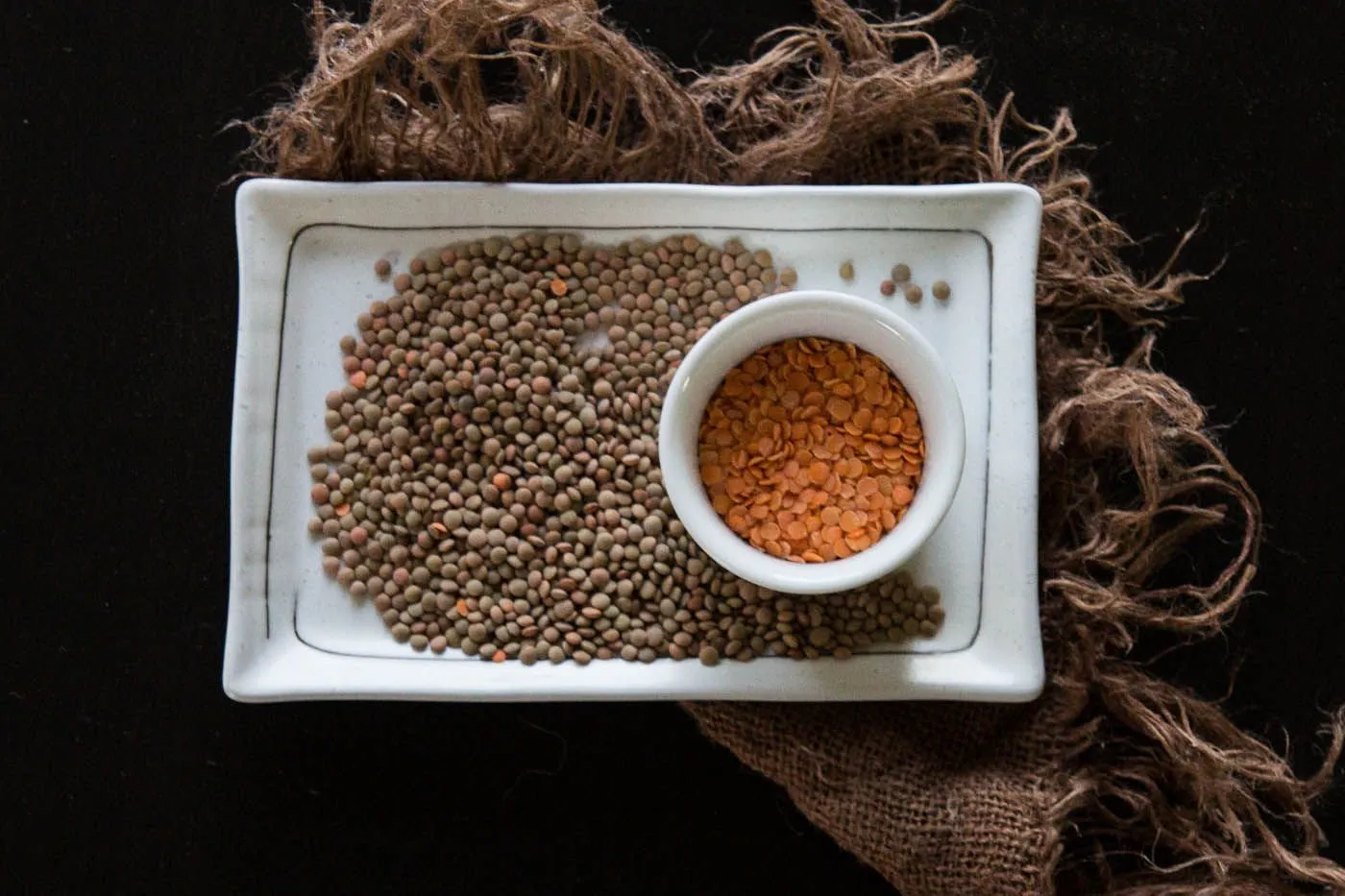 |
| Masoor and Masoor Dal |
Masoor dahl - red lentils
If you've ever been in an organic store
where they have bulk foods you might have seen bins full of small,
flattish round, red or reddish orange legumes. This is a type of dahl
called masoor dahl in India.It is brown skinned lentil that is orange on the inside. Masoor dal has a
pleasant earthy flavor and is very common in Northern India. It is
commonly used to make dal, soups and stews.
Chana dahl - split garbanzos

This is a smaller type of garbanzo than
the stuff we find on the grocery store shelves here. It can be very
difficult at first to tell the difference between chana dal and Toor dal
- they're about the same size and about the same color. However, chana
dal is slightly irregular in shape (a little bit lumpy looking of you
look closely) and a bit thicker than toor dal. The whole bean is
closer to round in shape than whole toor dal (pigeon peas). So if you
can compare them side by side, chana is slightly larger, thicker,
bumpier. Toor dal is flatter, slightly smaller, more regular in shape.

Toor dahl - split pigeon peas

Note the greater symmetry and more
flattish shape of this compared to Chana dahl.

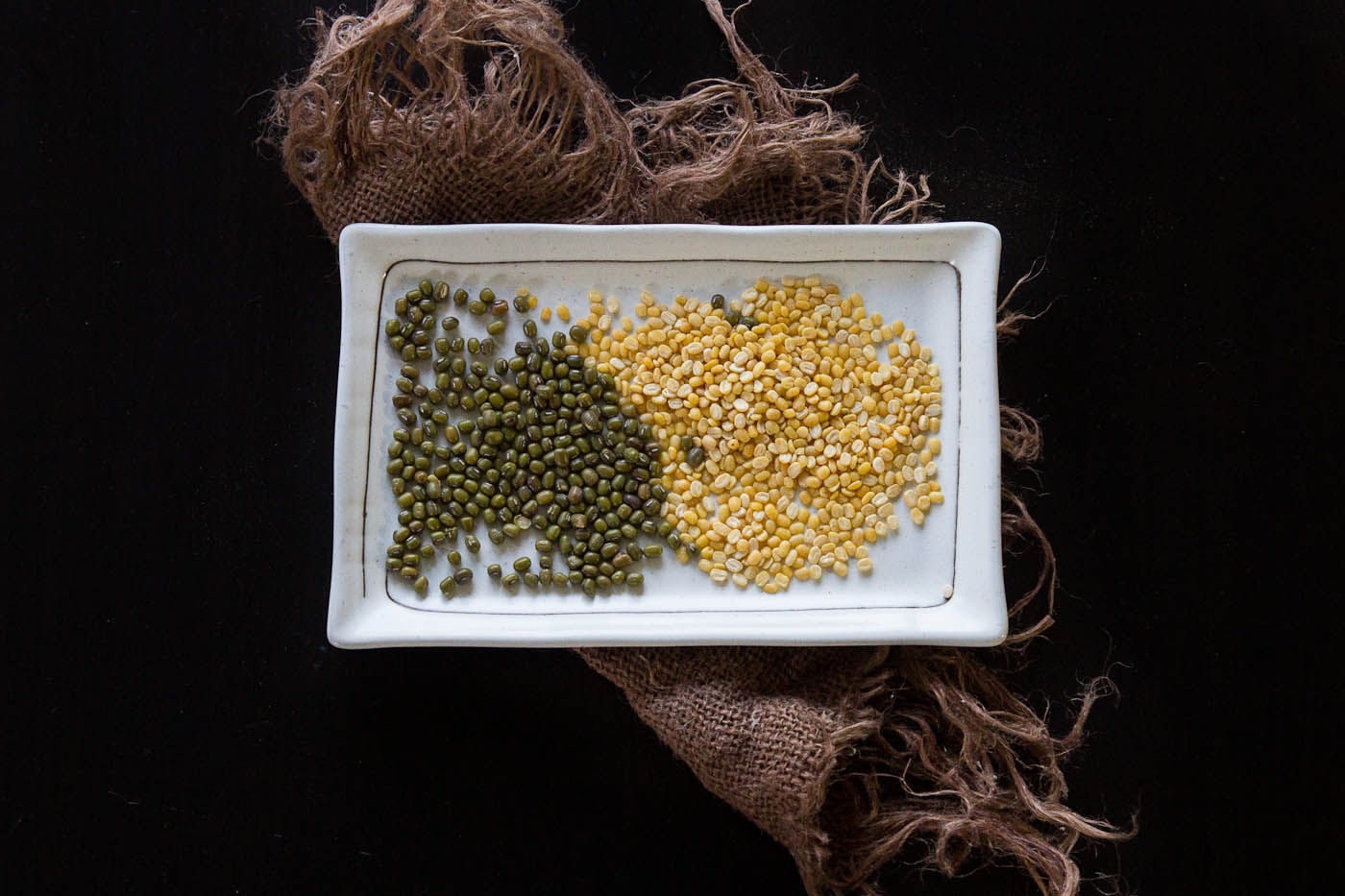
Mung dal (also called green gram when it is whole) and urad dahl (see below) can
also be difficult to differentiate. In general, urad dahl will be
chalkier and nearly white, while mung dahl will be more of a creamy
yellow. Whole mung is a small oblong bean with a black eye and a green
skin. The whole, unhulled mung bean is used to grow the bean sprouts we
see in a lot of Chinese dishes.
They are eaten whole, sprouted, split with the skins on and split with the skins removed.
Mung beans with their skins on have a flavor reminiscent of green leafy vegetables but the mung dal with the skins removed has a mild sweet flavor and is often used for desserts.
They are eaten whole, sprouted, split with the skins on and split with the skins removed.
Mung beans with their skins on have a flavor reminiscent of green leafy vegetables but the mung dal with the skins removed has a mild sweet flavor and is often used for desserts.
 |
Urad Dahl |
Urad is very similar in appearance to
mung dal, urad being whiter compared to creamy yellow for mung. The
whole bean is very dark, nearly black, small and oblong. The whole bean
is easily differentiated from whole mung.
Urad has an earthy flavor and an unusual mucousy texture (it’s a good thing!) when it’s cooked. The popular, and amazing, dal makhani is made with urad. Papad (or poppadums) are usually made with urad dal as well.
Urad has an earthy flavor and an unusual mucousy texture (it’s a good thing!) when it’s cooked. The popular, and amazing, dal makhani is made with urad. Papad (or poppadums) are usually made with urad dal as well.
Rajma dal - red kidney beans
Rajma dal is simply whole red kidney beans. Generally the varieties used in India are smaller than some of the varieties you will find on grocery store shelves in the US. If you have a choice when buying kidney beans for use in a recipe calling for rajma dal, buy the smaller size bean when available.
 |
| Black Eyed Peas and Azuki beans |
There are many other types of dal but these are the most common types. Dals are used whole, hulled and split, or ground into flour. Besan, for instance, is ground urad dal. Some dals are wet-ground (you soak them and then grind them in special grinders to make a paste) and then fermented to make dosai (sort of like a crepe) or idli (a steamed rice-dal patty frequently served with sambar).
Cooking time for various dals and pulses
| Bean | Cook Time | Pressure Cooker Time | Whistles | Slow Cooker | Soak |
|---|---|---|---|---|---|
| Mung, whole | 60 to 70 minutes | 8 to 10 minutes | 5 | low 5 to 6 hours | 4 hours (optional) |
| Mung, split | 20 minutes | 6 to 7 minutes | 3 | low 3 to 4 hours | optional |
| Urad, whole | 60 to 70 minutes | 10 to 12 minutes | 6 | low 5 to 6 hours | 4 hours (optional) |
| Urad, split | 30 minutes | 8 to 9 minutes | 4 | low 4 to 5 hours | 30 minutes (optional) |
| Garbanzo, white/brown | 70 to 90 minutes | 20 minutes | 8 | low 8 to 9 hours | 8 hours to overnight |
| Garbanzo, split (channa dal) | 60 to 70 minutes | 15 minutes | 7 | low 7 to 8 hours | optional |
| Masoor, whole | 40 to 45 minutes | 7 to 9 minutes | 7 | low 7 to 8 hours | optional |
| Pigeon Pea, whole | 70 to 90 minutes | 15 to 20 minutes | 8 | low 8 to 9 hours | 8 hours to overnight |
| Pigeon Pea, split (tuver dal) | 30 to 40 minutes | 7 to 9 minutes | 5 | low 5 to 6 hours | 30 minutes (optional) |
| Black-eyed Pea/Adzuki, whole | 60 to 70 minutes | 15 to 20 minutes | 6 | low 6 to 7 hours | optional |
| Black-eyed Pea, split | 30 to 40 minutes | 8 to 9 minutes | 4 | low 4 to 5 hours | optional |
| Dry green Pea, whole | 60 to 70 minutes | 15 to 17 minutes | 6 | low 6 to 7 hours | 8 hours to overnight |
| Kidney Beans, whole | Boil for 30 minutes then simmer for 30 to 60 more minutes. | 12 to 15 minutes | 6 | Toxic. Do not cook in slow cooker. | 8 hours to overnight |
Cooking Notes:
- Before you cook the pulses, sift through them to take out any pebbles or debris. Then rinse them a few times.
- Pulses taste best when they are cooked slowly. When cooking pulses on the stove top, bring to a boil and lower heat to medium low and let simmer. Start counting the cooking time once the pot has come to a boil and not before. In the case of kidney beans, boil for 30 minutes before lowering heat to simmer.
- If your pulses are old, they can take double the time to cook. If they haven’t softened in the time indicated, don’t worry. Just cook until soft. Make sure to add more water as needed.
- When cooking pulses, hold off adding salt or acids (such as lemon or vinegar) until the end, or the they will not soften.
- Water: If you are cooking on the stovetop or slow cooker, use about 3 to 4 times the water. In the pressure cooker, two times the water will do. Always keep an eye on the stove and add more water if it starts to look dry.
- Indian pressure cookers are a little different from the ones available in the West. They usually release steam regularly in what is referred to as “whistles.” These whistles are counted to determine cook time. They are not always accurate and can vary from cooker to cooker. So use these whistle counts as a guide and figure out what works best for your cooker.
- Soaking: In the cases where soaking is optional, if you soak the pulses, it will reduce the cooking time. The cooking time I’ve mentioned is for unsoaked pulses.
- Slow cookers can be a great, convenient way to prepare pulses, just throw everything in in the morning and when you get home from work your food is ready. But some beans are toxic until they are boiled (for at least 30 minutes), and slow cookers can actually make them more toxic. If you want to use the slow cooker on these beans, boil them for 30 minutes before adding them to the mixture, or use canned beans which are already boiled.
Maskai Saaru Recipe
Main Ingredients: Brinjal, Ridge gourd, Toor dhal(ridge gourd optional)
For taste: Salt, green chili, tomato
For the seasoning: oil, mustard seeds, hing, curry leaves, onion
For flavor: coriander leaves, coriander powder and tamarind water
Method:
Cook toor dhal (1 cup + 2-3 cup water),brinjal,cut pieces of Ridge gourd, chopped onions, 6-7 green chilies,and few garlic pods. Also add turmeric powder, coriander powder, fenugreek seeds to the cooker.
Wait for 3-4 whistles.
When the dhal and vegetables have cooled, mash both of them manually.
Heat any cooking oil/ghee (about two table spoons)and when it's hot, put in mustard seeds, curry leaves, chopped tomato, few smashed garlic pods and hing. When the tomato turn color, pour in to the mashed dhal and vegetables. Add salt and tamarind water.
Bring to a boil. Add coriander leaves at the end.
Nugge Kai Sambhar
Ingredients (240 ml cup used)
- ¾ Cup Toor dal / kandi pappu
- 3 drumsticks (cut to finger length)
- 3 onions halved or 10 shallots
- 1 large tomato (chopped small)
- 1 to 2 green chilies
- ½ tbsp. ginger garlic paste (optional) (refer notes)
- ½ tsp red chili powder
- ¼ tsp turmeric
- 1 tbsp. sambar powder
- Small lemon sized tamarind ball
- 2 to 3 tbsp. Fresh grated coconut
Tempering
- 1 red chili (broken)
- 1 sprig curry leaves
- ½ tsp mustard
- ½ tsp cumin
- ¼ tsp methi seeds / menthulu(optional)
- 1 garlic crushed slightly
- 1 tbsp. oil
- Pinch of hing
- Coriander leaves
Instructions
- Pressure cook dal to smooth with 1 ½ to 2 cups water.
- Soak tamarind in warm water, squeeze, and filter the juice.
- Pour 4 cups of water in a pot and add all the chopped vegetables and cook till drumsticks are half cooked.
- Add salt, turmeric, red chili powder, sambar powder and ginger garlic paste. Continue to cook till the drumsticks are fully done.
- Add coconut, tamarind juice. Mash the dal to smooth or blend it to puree. Alternately can use a colander to filter the dal. Add coriander leaves. Press dal with a big spoon.
- Mix well. Bring it to a boil.Add oil to a small pan, when the oil becomes hot, add mustard, cumin and methi. When they crackle, add red chilli curry leaves and garlic.Off the stove and add hing. Pour this tempering over the sambar.
- If you plan to refrigerate, do it immediately once it is cool.
- Serve with rice and ghee.
Thursday, November 5, 2015
Different pulses used in Indian cooking
Different pulses used in Indian cooking.
Photo attached to differentiate the pulses used in Indian cooking.

Photo attached to differentiate the pulses used in Indian cooking.

Mosappu - Indian mashed greens
Masoppu means Mashed/Maseda soppu, this sambhar is made of combination many
greens like Amaranth/Danttu, Menthya, hulli soppu, Basale soppu/Malabar Spinach, Spinach,Dill/Sabasige soppu.
Ingredients :
Toor Dal : 1/2 - 1 Cup
Greens : Mix of all the greens about 250 gms
( Palak, Fenugreek, Dill, Danttu/Amaranth,Hulli)
Tomato : 1 - 2
Onion : 1
Garlic : 5 -6 cloves
Jeera : 1 tsp
Curry, Coriander leaves.
Green chilles : 4 - 5
Sambhar powder or coriander powder: 1/2 - 1 tsp
Preparation:
Into pressure cooker :
Toor dal, chooped greens, chopped onions, garlic and jeera
Wait for 3-4 whistles from pressure cooker.
Mash the boiled mixture of greens & dal to a fine paste with help of a butter churner/ spoon, mash tomatoes & add to the mixture.
Now keep a vessel add oil , add mustard seeds when it splutters add, chopped onion (optional) curry leaves, add the mashed mixture to the vessel. add sambhar powder (or coriander powder) , add salt to the taste, if you want you can add tamarind juice also.
Boil for few minutes depending upon the consistency.
Serve with rice or chapathi.
Ingredients :
Toor Dal : 1/2 - 1 Cup
Greens : Mix of all the greens about 250 gms
( Palak, Fenugreek, Dill, Danttu/Amaranth,Hulli)
Tomato : 1 - 2
Onion : 1
Garlic : 5 -6 cloves
Jeera : 1 tsp
Curry, Coriander leaves.
Green chilles : 4 - 5
Sambhar powder or coriander powder: 1/2 - 1 tsp
Preparation:
Wash & chop the green vegges.
Wash the toor dal, chop onion, cloves of garlic.
Into pressure cooker :
Toor dal, chooped greens, chopped onions, garlic and jeera
Wait for 3-4 whistles from pressure cooker.
Mash the boiled mixture of greens & dal to a fine paste with help of a butter churner/ spoon, mash tomatoes & add to the mixture.
Now keep a vessel add oil , add mustard seeds when it splutters add, chopped onion (optional) curry leaves, add the mashed mixture to the vessel. add sambhar powder (or coriander powder) , add salt to the taste, if you want you can add tamarind juice also.
Boil for few minutes depending upon the consistency.
Serve with rice or chapathi.
Subscribe to:
Posts (Atom)